Dongyi Belt
Tire & RubberRaw Rubber Block Handling with Custom Suction Pads
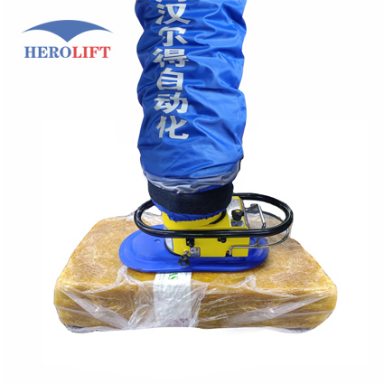
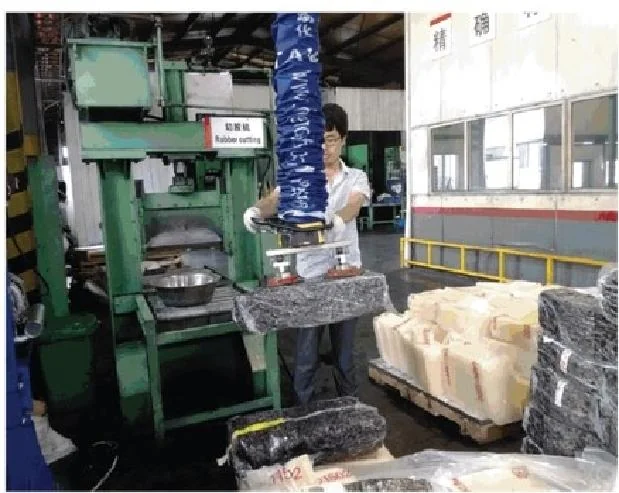
Custom soft-edged suction pads grip uneven 50 kg raw rubber bales for transfer from pallets to the cutting machine.
Browse case studies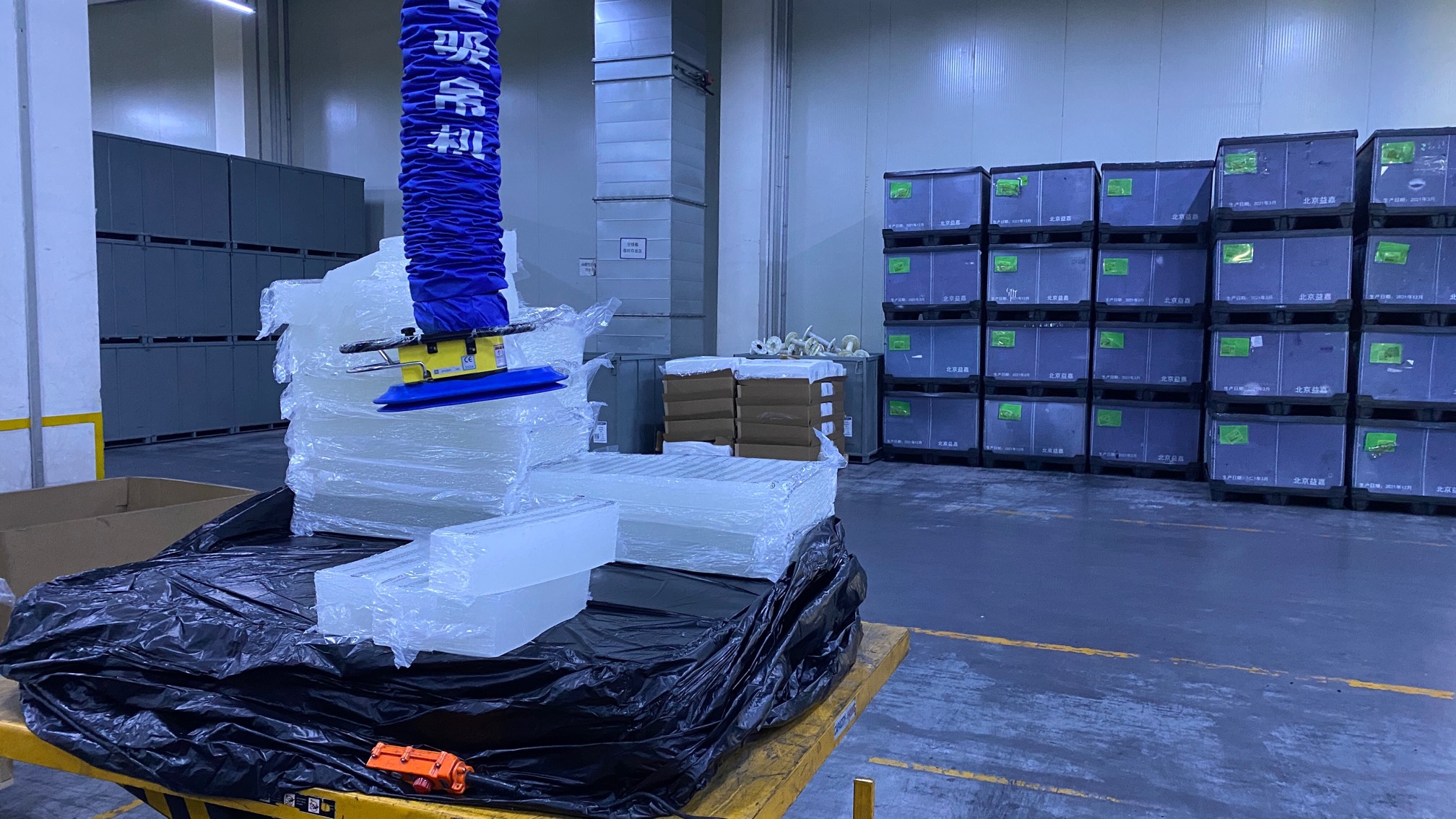
The tire and rubber industry handles some of the heaviest, most challenging materials in manufacturing - from raw rubber bales and carbon black sacks to green tires and finished heavy-duty tires weighing over 80 kg each. HEROLIFT delivers rugged, purpose-built lifting and handling solutions that enable safe, efficient handling throughout the entire tire production cycle. Our tire grippers, bale lifters, sack handling vacuum systems, and automated handling robots are engineered to withstand the demanding conditions of rubber processing and tire manufacturing environments - reducing operator strain, protecting product quality, and keeping production lines running at full output.
Modern rubber factories must operate efficiently. Whether it is tire manufacturing, rubber processing, or finished product warehousing, flexibility and safety need to be taken into account. Herolift's intelligent lifting system plays an important role in improving the safety and efficiency of production processes. With our vacuum lift, any employee can easily transport heavy items such as tires, rubber blocks, and rubber rolls. It can completely solve the pain points of labor-intensive and easily damaged products in traditional transportation methods. This helps with easier staffing and higher production flexibility.
In tire factory, rubber loading is a very tough task for operators.It's 20-40kg, but with additional adhesive force,normally they need 50-80kg to separate top layer. Vacuum lifter is ideal solution for this application, quick, safe and less effort.
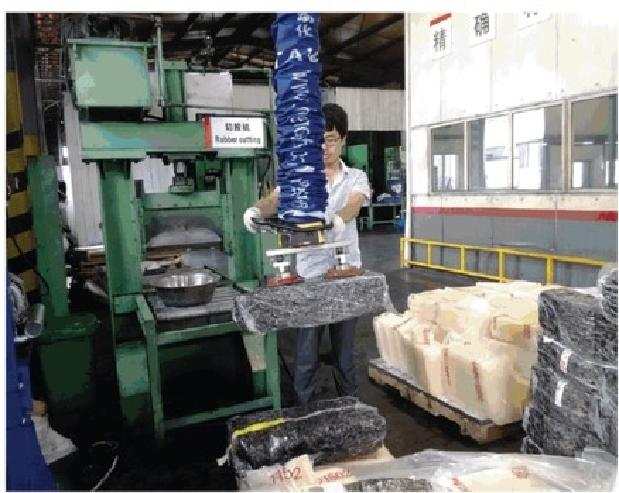
Rubber components are usually bulky or have special shapes, making them unsuitable for traditional storage and handling solutions. The key to efficient storage and retrieval lies in efficiency. If the operation organization is chaotic or there are many types of materials, valuable time and money will be wasted. Serious issues include product damage or worker injuries during transportation. Herolift's vacuum tube lifter series makes storage and retrieval of exhaust rubber blocks, finished tires, coils, and components unprecedentedly convenient. The Herolift system can be customized to accommodate any type of storage operation, providing a space saving, ergonomic, and easy-to-use solution. Through these operational improvements, rubber companies can complete production faster and more frequently, and suppliers can effectively manage transportation needs without posing risks to products or employees.
Dongyi Belt
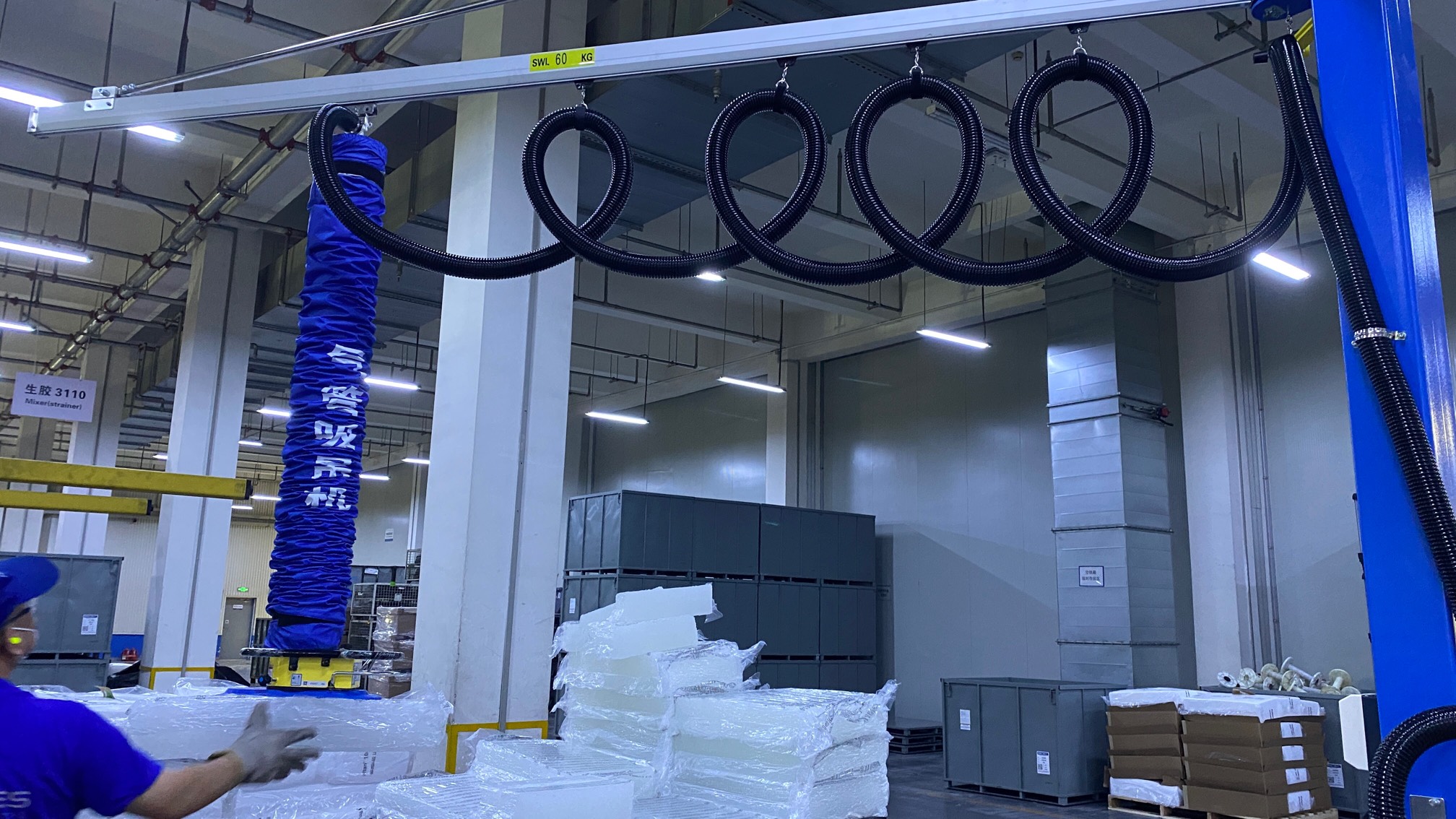
Tire & RubberCustom soft-edged suction pads grip uneven 50 kg raw rubber bales for transfer from pallets to the cutting machine.
Browse case studies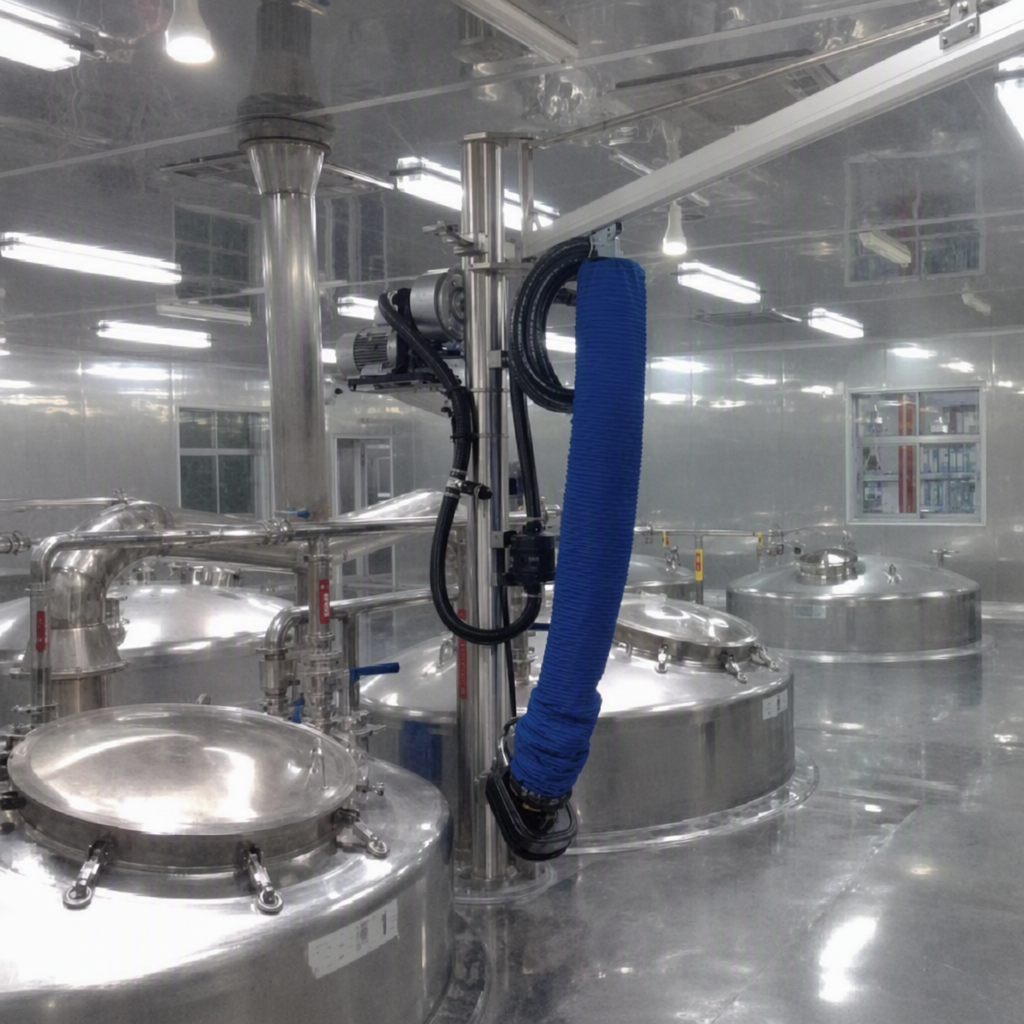
Red Bull
Food & BeverageA single operator unloads 50 kg sugar sacks and feeds production using a vacuum tube lifter with integrated grip-and-pour handling.
Browse case studies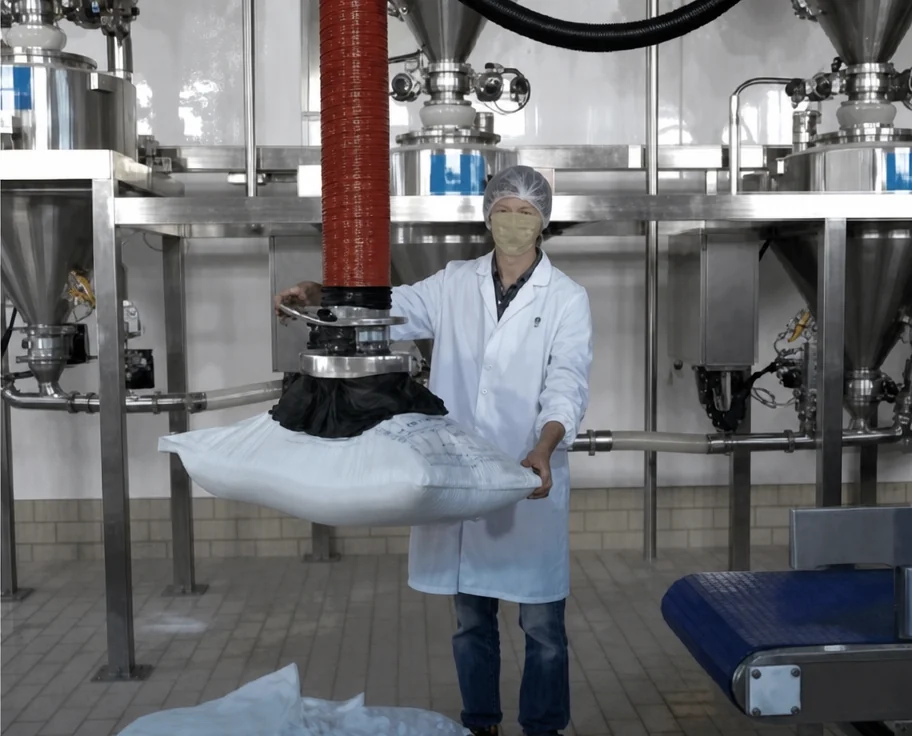
Yili Dairy
Dairy & FoodAn articulated lifting arm brings 50 kg sugar sack handling to a dairy workshop with restricted ceiling height.
Browse case studiesFAQ
Rubber loading is a very tough task — rubber blocks weigh 20-40 kg, but with additional adhesive force, operators normally need 50-80 kg to separate the top layer. Traditional transportation methods are labor-intensive and prone to product damage.
Herolift’s vacuum tube lifter series and vacuum lifters make storage and retrieval of rubber blocks, finished tires, coils, and components convenient. The system can be customized to accommodate any type of storage operation.
The vacuum lifter is the ideal solution for rubber loading — quick, safe, and requiring less effort. Any employee can easily transport heavy items such as tires, rubber blocks, and rubber rolls, solving the pain points of labor-intensive and easily damaged products.
Yes. A large domestic tire manufacturer with multiple production bases producing over a million tires annually adopted Herolift’s solution to help operators stack heavy truck tires. Operators found stacking more ergonomic, with substantial improvements in work experience and health.